Tractor Controls: A Comprehensive Guide for Enhanced Farm Productivity
Ready to transform your farm operations and unlock peak efficiency? Mastering your tractor's controls is the cornerstone of success. This guide, designed for farmers of all experience levels—from seasoned professionals to newcomers—will provide a step-by-step approach to safe and efficient tractor operation. We'll cover pre-operation checks, control functions, attachment management, safety protocols, and efficiency-boosting techniques. Let's get started! For more in-depth information on John Deere controls, check out this helpful resource: John Deere Controls Explained.
Pre-Operation Checklist: Ensuring a Safe and Productive Day
Before starting your tractor, a thorough pre-operation check is non-negotiable. This minimizes the risk of accidents and malfunctions, ensuring a productive and safe workday. Think of it as a pilot's pre-flight checklist—essential for a successful operation.
Fluid Levels: Verify engine oil, transmission fluid, coolant, and hydraulic fluid levels. Low fluids can severely damage your tractor, resulting in costly repairs. Regular checks prevent such problems. (Tip: Regularly consult your owner’s manual for recommended fluid levels.)
Tire Pressure: Correct tire inflation is crucial for fuel efficiency and traction. Under-inflated tires increase fuel consumption and reduce traction, potentially leading to damage. Use a pressure gauge to regularly check tire pressure and adjust accordingly. (Did you know that maintaining optimal tire pressure can improve fuel efficiency by up to 10% according to recent studies?)
Safety Systems Inspection: Carefully examine your tractor's safety features. This includes brakes for responsiveness, lights for visibility, the PTO (power take-off) for proper engagement and disengagement, and the three-point hitch for smooth operation. Addressing minor issues now prevents major problems later. "Regular safety checks are paramount to safe operation," advises Dr. Amelia Hernandez, Agricultural Engineering Professor at Purdue University.
Attachment Inspection: Before connecting any implements (e.g., plow, harrow), inspect them thoroughly for damage. Ensure secure connections to prevent accidents. A loose attachment can be dangerous and lead to costly repairs.
Decoding Your Tractor's Controls: A Step-by-Step Approach
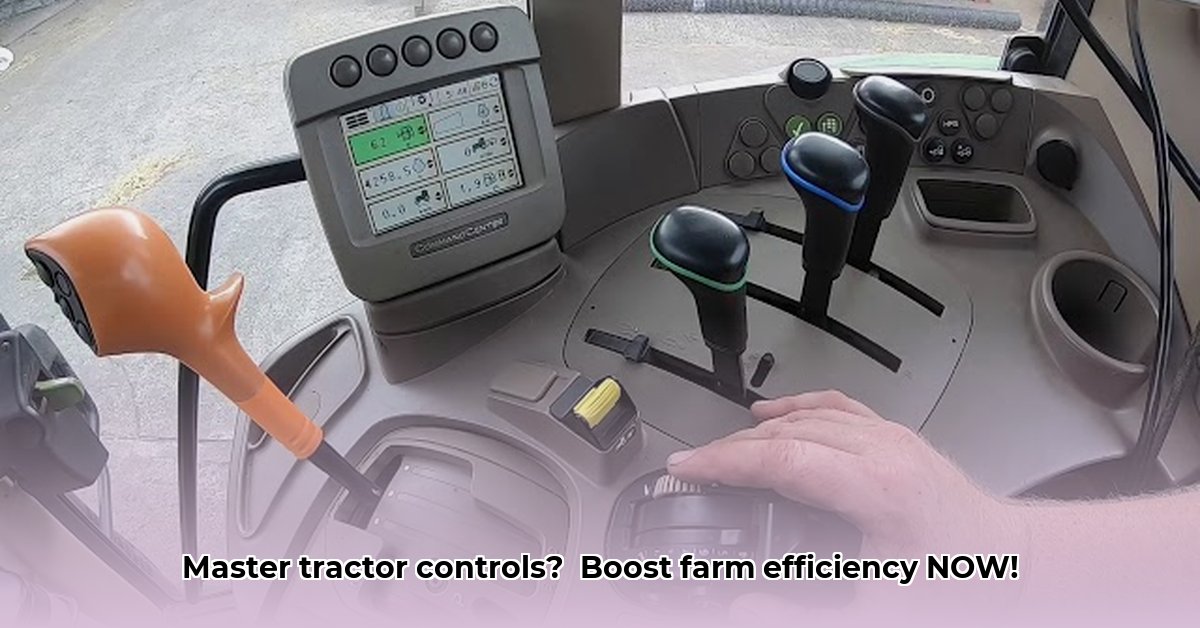
Understanding your tractor's controls is paramount for efficient and safe operation. While layouts vary slightly, most tractors share core components.
Steering Wheel: Smooth steering is essential for precise fieldwork. Practice gentle turns to avoid abrupt movements.
Clutch and Transmission: Mastering smooth shifting prevents jerky movements and potential damage. Practice until you achieve seamless gear changes.
Throttle: Controls engine speed. Find the optimal balance between power and fuel efficiency for different tasks.
Hydraulic Controls: Manage implements and attachments. Learn their operation to maximize control and efficiency.
PTO (Power Take-Off) Lever: Engages power to your implements. Always disengage the PTO before connecting or disconnecting attachments. This is a critical safety precaution.
Three-Point Hitch Controls: Raise and lower implements. Smooth, controlled movements are key for safety and efficiency.
Taming the Attachments: Expanding Your Tractor's Capabilities
Attachments significantly expand your tractor's capabilities, enhancing efficiency and versatility across various farming tasks. However, proper handling is crucial.
Safe Attachment Connections: Strictly adhere to the manufacturer's instructions. Improper connections can cause accidents or damage.
Mastering Each Attachment: Before using any attachment, familiarize yourself with its operating procedures and safety precautions via the manufacturer's manual. (Remember: A little preventative study saves significant downtime and repair costs.)
Attachment Maintenance: Regular maintenance prevents problems and costly repairs. Clean, lubricate, and inspect attachments regularly.
Safety First: Prioritizing Safety in Tractor Operation
Safety is paramount. It's not just a suggestion, but a critical element of responsible tractor operation.
Professional Training: Invest in professional tractor training. Proper knowledge is crucial for safe and efficient operation.
Safety Gear: Always wear appropriate safety gear, including sturdy boots, safety glasses, hearing protection, and gloves, as needed.
Situational Awareness: Be constantly aware of your surroundings—obstructions, other people, changing weather, and light conditions.
Terrain Awareness: Adjust speed and driving style to the terrain, especially when operating on slopes. Avoid operating on steep terrain when possible.
Emergency Preparedness: Develop an emergency plan and know how to react effectively in case of unforeseen circumstances.
Boosting Efficiency: Optimizing Tractor Operation for Maximum Output
Efficient tractor operation involves smart work, not just speed.
Preventative Maintenance: Regular maintenance keeps your tractor running smoothly and extends its lifespan, preventing unexpected breakdowns and costly repairs. (According to industry statistics, preventative maintenance can reduce downtime by up to 75%.)
Mastering Techniques: Practice to refine your skills. Efficient tractor operation leads to increased productivity.
Optimal Speed: Adjust your speed to the task. Maintaining a consistent pace ensures fuel efficiency and minimizes errors.
Keeping Up with Technological Advancements: Embracing Modern Innovations
Tractor technology is constantly evolving. Stay updated on advancements like GPS guidance, automated steering, and precision farming methods to maximize farm efficiency.
Legal Compliance: Adhering to Regulations
Comply with all relevant laws and regulations for tractor operation and agricultural practices, including road usage rules, child labor laws, and other local or national regulations. This is crucial for both legality and ethical farm management.
This guide offers a solid foundation for safe and efficient tractor operation. Prioritize safety, and remember that efficient operation translates to higher yields, lower costs, and a more rewarding farming experience.